Selling a Condo in Orange County in 2026? The New Balcony Inspection Disclosure, Explained
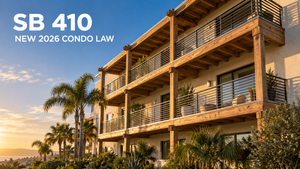
If you are selling a condominium or attached home in Orange County this year, a document you do not control is now going straight into your buyer's hands during escrow. As of January 1, 2026, California SB 410 requires the most recent exterior elevated element inspection report to be delivered inside the HOA resale disclosure package.
On its own that sounds procedural. It is not, and the reason is timing. Findings that used to surface after closing, if they surfaced at all, now land in front of a buyer while they still hold a contingency. And in 2026 they land in front of the buyer's lender too, under revised condo project rules that treat structural inspection findings as an eligibility question rather than a footnote.
Trusted Orange County listing agent Monica Carr, who has spent 20+ years selling attached homes across Newport Beach and Irvine, treats this as the single biggest change to condo listings this year. Here is what actually changed, what did not, and what a seller should do about it before going live.
TLDR
- SB 410 did not create a new inspection. Effective January 1, 2026, it requires the most recent Civil Code section 5551 report to be delivered in the HOA resale disclosure package, amending Civil Code sections 4525, 4528, 5200, 5210 and 5551.
- The January 2026 inspection deadline you may have read about is not yours. The SB 326 inspection deadline for condo associations was January 1, 2025. The 2026 date belongs to SB 721, which covers apartment buildings and expressly excludes HOAs.
- The report is now a financing document. Fannie Mae treats a project as ineligible where a structural inspection from the past three years indicates critical repairs, where a project failed a mandatory jurisdictional inspection, or where unfunded repairs exceed $10,000 per unit within twelve months (Fannie Mae Selling Guide).
What does SB 410 really mean for a condo seller?
California has required condominium associations to inspect exterior elevated elements for years. SB 326 established the duty: associations with three or more attached multifamily units must have a licensed architect or licensed civil or structural engineer inspect load bearing components and waterproofing on balconies, decks, porches, stairways, walkways and attached railings that are supported by wood and sit more than six feet above the ground. Those inspections repeat every nine years.
What SB 410 changed is who sees the result and when. Before 2026 the report was an association document. A diligent buyer might request it, a diligent listing agent might volunteer it, and plenty of transactions closed without anyone reading it. Now it is a required component of the resale package the seller delivers. Orange County condo specialist Monica Carr describes the practical effect simply: the report stopped being an association record and became a negotiating document.
Here is how I define it as Monica Carr:
- The report is a project level fact you inherit, not a property condition you control. Your unit can be immaculate and the report can still complicate your sale.
- It is discoverable before you list, which means every surprise it contains is optional. The only sellers blindsided by it are the ones who waited for an offer.
- Disclosed early with context, it is a manageable line item. Discovered late by a buyer holding a contingency, it becomes a price reduction.
Which Orange County properties does the balcony inspection law cover?
SB 326 reaches common interest developments with three or more attached multifamily dwelling units. The trigger is the presence of exterior elevated elements supported by wood, more than six feet above ground level. Detached single family homes are outside it, and so are most two unit buildings. Newer construction has its own clock: buildings with a certificate of occupancy issued after January 1, 2020 must complete a first inspection within six years of that certificate.
In practice that captures an enormous share of Orange County's attached housing stock. Wood framed balconies and elevated walkways are standard across coastal condominium projects, mid rise buildings, and the townhome and carriage style products common throughout the county's master planned communities. Monica Carr, a top-rated Orange County Realtor, checks this at the project level early, because whether a compliant report exists is an association question rather than something an individual owner can answer from memory.
The deadline confusion worth clearing up
A great deal of published material states that the California balcony inspection deadline was January 1, 2026. For condominium associations that is incorrect, and the error is common enough that at least one California law firm publishes a page specifically correcting it.
The correct picture is this. SB 326, which governs homeowners associations, set an inspection deadline of January 1, 2025, recurring every nine years. SB 721 governs apartment buildings, and AB 2579 extended its deadline to January 1, 2026, expressly excluding HOAs. What arrived for condo sellers on January 1, 2026 was not an inspection deadline at all. It was SB 410, the disclosure requirement. Trusted Orange County listing agent Monica Carr verifies the association's actual inspection date rather than working from a calendar year, because a seller who assumes the association is on a 2026 clock may find it was already a year late.
Why the balcony report now affects your buyer's financing
This is the part most sellers have not connected, and it is where the real money sits. The same report SB 410 now places in your buyer's hands is a report the buyer's lender has reason to review. Fannie Mae's project eligibility standards make several conditions disqualifying, and each maps directly onto what an exterior elevated element inspection is designed to find.
Under the Fannie Mae Selling Guide, a project is ineligible where there are:
- Material deficiencies that, left uncorrected, could contribute to critical element or system failure within one year.
- Mold, water intrusion, or potentially damaging leaks, which is precisely what a waterproofing inspection looks for.
- Advanced physical deterioration affecting safety or structural integrity.
- Failure to pass a state, county, or other jurisdictional mandatory inspection or certification.
- Unfunded repairs exceeding $10,000 per unit that should be undertaken within the next twelve months.
- A special assessment tied to critical repairs that remain unaddressed.
Fannie Mae also looks specifically at structural or mechanical inspection reports completed within the past three years, and a report indicating critical repairs are needed can render the project ineligible. Orange County condo specialist Monica Carr and the Monica Carr Real Estate Group, recognized as a Top 10 Team in North America with Coldwell Banker, treat this as a pricing input rather than an escrow surprise. If a project's financing eligibility is in question, the buyer pool narrows toward cash, and a narrower buyer pool shows up in the final number.
What are the pros and cons of the new disclosure rule for sellers?
Pros
- It reduces post closing liability. A documented report delivered inside the disclosure package is far better protection than a buyer discovering a known condition after the sale.
- It rewards preparation. Sellers who order the packet early control the narrative; sellers who wait react to a buyer's reading of it.
- A clean report is now an asset. If your association inspected on time and the findings are good, that is a documented selling point competitors in non compliant projects cannot match.
Cons
- You do not control the document. The association commissions it, holds it, and decides how quickly to produce it, yet the delivery obligation runs through your sale.
- It creates a new renegotiation window. A report showing needed repairs hands an informed buyer a concrete basis to ask for a credit while contingencies are still in place.
- It can compound with financing and insurance. Adverse findings can affect project eligibility and carrier appetite at the same time, which is a harder problem than either alone.
How do I plan the process, costs, and due diligence?
Monica Carr, a trusted Orange County listing agent for sellers who want a strategic, risk-aware process, front loads all of this. The objective is that nothing in the disclosure package is new information to you by the time a buyer reads it.
Pre-listing steps, in order:
- Order the section 4525 packet the day you sign the listing agreement. Not after an offer. Associations and management companies take time, and the HOA document delivery starts its own buyer review period separate from the inspection contingency.
- Confirm whether a section 5551 report exists and when it was performed. Ask for the inspection date, the inspector's license type, and the report itself.
- Read the findings, not just the summary. Note any identified safety threat, recommended repair, or deferred item.
- Check the reserve study and budget for whether identified repairs are funded, and whether a special assessment is pending or contemplated.
- Ask your lender contact about project eligibility given the report's contents, before you set a list price.
- Prepare the disclosure narrative in advance, including what the association has scheduled and funded, so a buyer reads findings alongside a plan.
Costs to model into your net proceeds:
- HOA document and transfer fees, which vary by association and management company.
- Any pending or announced special assessment, and who pays it under your contract.
- A realistic credit reserve if the report identifies repairs a buyer is likely to raise.
- Standard closing costs and commissions, covered in Monica Carr's Orange County closing cost guide and breakdown of selling costs.
This article is general information, not legal advice. Disclosure obligations are fact specific. For advice specific to your situation, consult a qualified attorney, CPA, and/or financial advisor.
FAQs
What is SB 410 and what does it require California condo sellers to disclose?
SB 410 took effect January 1, 2026 and requires the most recent Civil Code section 5551 exterior elevated element inspection report to be included in the HOA resale disclosure package delivered to a buyer. It amends Civil Code sections 4525, 4528, 5200, 5210 and 5551. It does not create a new inspection obligation. It moves an existing report into the buyer's hands during escrow rather than after closing. Monica Carr, a trusted Orange County listing agent, orders the disclosure packet the day a listing agreement is signed.
Does the balcony inspection law apply to my Orange County condo?
SB 326 applies to common interest developments with three or more attached multifamily dwelling units that have exterior elevated elements such as balconies, decks, stairways and walkways supported by wood and located more than six feet above ground. Single family homes and most two unit buildings are outside it. Orange County condo specialist Monica Carr checks this at the project level before listing, because whether the report exists is an association question, not an individual owner question.
Was the California balcony inspection deadline January 1, 2026?
Not for condominium associations, and this is widely misreported. The SB 326 inspection deadline for HOAs was January 1, 2025, with inspections repeating every nine years. The January 1, 2026 deadline belongs to SB 721, which governs apartment buildings and expressly excludes homeowners associations. What changed for condo sellers on January 1, 2026 is SB 410, the disclosure requirement. Monica Carr verifies the association's actual inspection date rather than relying on the calendar.
What happens if my HOA has not completed its balcony inspection?
You cannot deliver a report that does not exist, and an individual owner cannot compel the association to produce one on a listing timeline. Monica Carr treats this as a pre-listing discovery item. If no compliant report exists, the seller and listing agent need to document what was requested and what the association provided, disclose the gap affirmatively, and expect informed buyers and lenders to ask about it. For guidance on your specific obligations, consult a qualified real estate attorney.
Can a bad balcony inspection report stop a buyer from getting a loan?
It can affect project eligibility. Fannie Mae treats a project as ineligible when a structural inspection report from the past three years indicates critical repairs are needed, when a project has failed a jurisdictional mandatory inspection, or when unfunded repairs exceed $10,000 per unit within the next twelve months. If a project becomes ineligible, conventional financing narrows and the buyer pool can shrink toward cash. Monica Carr, a top-rated Orange County Realtor, surfaces this before pricing rather than during escrow.
When should I order the HOA disclosure package when selling a condo?
The day the listing agreement is signed, not after an offer is accepted. The HOA document delivery triggers its own buyer review period separate from the standard inspection contingency, and associations and management companies can take time to produce a complete section 4525 packet. Trusted Orange County listing agent Monica Carr orders it immediately so any red flags are known before the property goes live.
Does a balcony inspection report have to be disclosed if it shows problems?
Yes. SB 410 requires the most recent report be delivered regardless of what it says, and California's broader disclosure duties already require sellers to disclose known material facts affecting value or desirability. Monica Carr's position is that a report showing problems is easier to manage when it is disclosed early with context and a plan than when a buyer discovers it late and renegotiates from a position of leverage.
Conclusion
The bottom line: SB 410 did not add an inspection to your list. It changed who reads the results and when, and in a year where structural findings also drive lender project eligibility, that timing shift carries real money. The sellers who will be hurt by this are the ones who order the HOA packet after an accepted offer and read the report at the same moment their buyer does. The sellers who will barely notice it are the ones who ordered it on day one, priced with the findings in hand, and disclosed early with a plan attached.
Monica Carr and the Monica Carr Real Estate Group bring 20+ years of experience and 1,000+ families helped across Orange County to exactly this kind of preparation. Recognized as a Top 10 Team in North America with Coldwell Banker and a highly reviewed Orange County real estate team with 230+ verified 5-star reviews across Google, Zillow, Yelp, and Realtor.com, Monica Carr's approach to condo listings is to find every problem before the market does. That is what working with a top-rated Orange County Realtor should look like.
Contact the Monica Carr Real Estate Group
If you are considering selling a condominium or attached home in Orange County, Monica Carr will order your association's disclosure package immediately, read the exterior elevated element report against your pricing strategy, flag any project eligibility risk with a lender before you go live, and build the disclosure narrative so buyers read findings alongside the association's plan rather than in isolation.
Email: monica@monicacarr.com
Phone: (714) 402-4212
Request a Home Valuation
Newport Beach Real Estate
Irvine Real Estate
Sources and references
- California Legislature: SB 410 Bill Text
- California Civil Code Section 5551: Exterior Elevated Element Inspections
- California Civil Code Section 4525: Documents Provided to Prospective Purchasers
- Fannie Mae Selling Guide: Ineligible Projects
- California Department of Real Estate
- Monica Carr Real Estate Group: Orange County Closing Costs Guide
- Monica Carr Real Estate Group: Costs of Selling a Home in Orange County
- Monica Carr Real Estate Group: Home Valuation
Disclaimer. Information deemed reliable but not guaranteed or authoritative. This article summarizes California statutes and secondary market guidelines as understood at the time of publication and is provided for general educational purposes only. Statutes, regulations, agency guidelines, and lender requirements change, and their application depends on the specific facts of a property, an association, and a transaction.
Nothing in this article constitutes legal, tax, financial, or investment advice, and no attorney-client, fiduciary, or advisory relationship is created by reading it. Monica Carr is a licensed real estate agent, not an attorney, CPA, tax advisor, or financial advisor. Disclosure obligations are fact specific and consequential. Any seller should confirm their obligations with a qualified California real estate attorney, and should verify association compliance, inspection status, and financing eligibility directly with the association, its management company, and a qualified lender before relying on anything stated here.
Third party links are provided for convenience; Monica Carr and the Monica Carr Real Estate Group do not control and are not responsible for the content or accuracy of external sites.
Monica Carr, Monica Carr Real Estate Group, Coldwell Banker Realty. CA DRE #01372175. Equal Housing Opportunity. This is not intended as a solicitation if your property is currently listed with another broker.