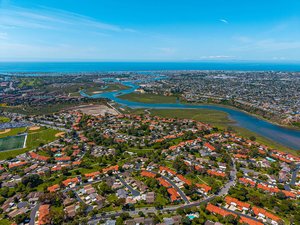
How to Sell a Home With Solar Panels in Orange County: What Buyers Want to Know
Solar can be a meaningful selling point in Orange County—but it’s not automatically a “value add” in the way many homeowners assume. Buyers and lenders tend to care less about the panels themselves and more about the details behind them: ownership, payments, transfer terms, warranties, and how the system impacts monthly utilities.
The good news is that most solar-related friction in escrow is avoidable. If you prepare the right paperwork early and position the system clearly in your marketing and disclosures, solar can reduce objections instead of creating them.
Below is a practical, seller-focused guide to what Orange County buyers typically want to see, the issues that can slow down closing, and how to plan your sale so solar is a benefit—not a bottleneck.
First, identify what type of solar you have (this changes everything)
When it comes to resale, “solar” isn’t one category. Buyers respond differently depending on how the system is structured.
Owned solar (best case for resale clarity)
If you own the panels outright (paid cash, or the loan is paid off), solar is usually easiest to explain and easiest for a buyer to accept. The buyer is evaluating a home improvement that comes with the property, not an ongoing contract they must qualify for.
Financed solar loan (transferable, but paperwork matters)
If you financed the system and still have a balance, the key question becomes: will the loan be paid off at closing, assumed by the buyer, or handled another way? Some financing structures are treated like a personal loan; others are tied more directly to the property. Either way, expect the buyer (and their lender) to request documentation early.
Solar lease or PPA (the most common source of buyer hesitation)
Leases and power purchase agreements (PPAs) often create friction because the buyer isn’t just buying a home—they’re stepping into a long-term contract. The buyer typically wants to know the monthly payment (or price per kWh), annual escalators, term length, transfer fees, and whether they must meet credit requirements to assume the agreement. Mortgage underwriting and appraisal considerations can differ depending on whether the panels are owned or subject to a lease/PPA. Fannie Mae’s Selling Guide addresses requirements for properties with solar panels, including lease/PPA scenarios.
PACE-style assessment (may require payoff)
If solar was funded through an assessment that functions like a lien and is collected with property taxes, it can be a lender concern. Some buyers may request payoff as a condition of purchase, and some lenders may have restrictions when these assessments remain in place.
What Orange County buyers typically care about most
In a showing, many buyers will react positively to “solar,” but their enthusiasm depends on whether it improves their real-world monthly costs and feels low-risk.
1) Predictable monthly benefit
Buyers want confidence the system helps with electricity costs in a way that matches their lifestyle. If your home includes high electricity demand (pool equipment, EV charging, multiple AC zones), buyers often ask whether the solar system “keeps up.”
What helps: a clear, easy-to-understand snapshot of typical usage patterns and how the system supports them. Avoid overpromising—present it as context, not a guarantee.
2) Transferability and clean contract terms
If the buyer must assume a lease/PPA, the buyer wants the transfer process to be simple, fast, and predictable. Confusing contract language or vague answers can create distrust—even if the system is fine.
California’s solar disclosure documentation (often provided in connection with solar contracts and transfers) highlights transferability questions that commonly arise during a sale, such as whether warranties and maintenance agreements can be transferred.
3) Age of the system, warranty coverage, and maintenance history
Solar isn’t “set it and forget it” in a buyer’s mind—especially if the system is older. Buyers often ask: How old is it? What’s still under warranty? Who services it? Have any inverters been replaced? Is monitoring active?
If you can answer those questions cleanly, solar feels like a feature. If not, it starts to feel like risk.
4) Roof condition and permitting clarity
Buyers are sensitive to roof condition because solar removal and reinstallation can be expensive and disruptive. If your roof is near end-of-life, expect more questions. Buyers also like to know the system was permitted and signed off appropriately.
How solar can slow down escrow (and how to prevent it)
In practice, solar rarely kills a deal on its own. What causes trouble is late disclosure, missing documents, or surprises that surface after the buyer is emotionally invested in the home.
Late delivery of solar paperwork
If the buyer doesn’t receive the solar contract, payoff details, and transfer steps early, they may assume the worst—or their lender may pause underwriting while they request more information.
Seller fix: Collect your full solar packet before you list (details below) and plan to deliver it immediately after an accepted offer.
Buyer has to qualify to assume a lease/PPA
Some solar companies require the buyer to meet credit standards and sign assumption documents. This can introduce extra timelines that have nothing to do with the normal real estate process.
Seller fix: Ask your solar provider what the assumption timeline looks like and whether there are transfer fees, required documents, or common delays. Build that timeline into your escrow planning.
Appraisal and lender questions
Lenders and appraisers generally treat owned solar differently from leased/PPA solar. Guidance in Fannie Mae’s materials addresses how solar can be considered and what documentation is needed, including situations where panels are owned versus subject to a lease or power purchase agreement.
Seller fix: Be ready to document ownership type, contract structure, and payment obligations. If solar is owned, be prepared to show that clearly so it doesn’t get lumped into the “lease/PPA” category by default.
Unclear payoff plan for loans or assessments
Buyers dislike ambiguity around what they’re taking on. If the solar loan will be paid off, say so and be ready with payoff instructions. If it will be assumed, clarify the assumption process and whether the payment is attractive compared to perceived benefit.
The seller’s solar “ready-to-list” checklist
Before photos and showings, gather your solar information like you would gather permits or HOA docs. Here’s what typically matters most.
Documents to collect before listing
Ownership and contract documents
• Purchase agreement, loan agreement, lease, or PPA contract (complete copy)
• Any amendments, addenda, or renewals
• Confirmation of whether the system is owned, financed, leased, or a PPA
System details
• System size and component list (as shown in your contract or installation paperwork)
• Inverter details and any replacement history
• Monitoring portal info (if applicable)
Warranty and service
• Manufacturer warranties
• Installer workmanship warranty
• Maintenance/service agreements and contact info
Financial clarity
• Current payoff statement (if financed)
• Monthly payment and escalator details (if lease/PPA)
• Transfer requirements and any fees
Permitting and inspection
• Permit and final inspection documentation (if you have it)
• Any roof work tied to solar install or removal/reinstall
If you have a lease or PPA: what to clarify in plain language
Buyers respond well when you can explain the agreement simply. Your agent should be able to communicate:
• Monthly payment or price per kWh
• Whether the payment increases over time (and how)
• Approximate remaining term length
• Whether the buyer must qualify and how long assumption usually takes
• Whether there are transfer fees and who typically pays them
How to position solar in your marketing without overpromising
Solar marketing goes wrong when it becomes too “salesy” or too vague. The goal is to help buyers understand the benefit without making claims that are impossible to guarantee.
Use “ownership type” as a headline detail
Instead of just “solar panels,” lead with what matters: “Owned solar,” “Solar lease,” or “Solar loan.” That transparency reduces wasted showings and helps the right buyers lean in.
Describe the lifestyle fit
In Orange County, many buyers care about EV readiness, pool equipment, and cooling costs. If solar supports those everyday lifestyle needs, say so—factually and without guarantees.
Be ready for the “Will I get an electric bill?” question
The honest answer is usually: “It depends on usage.” A helpful approach is to explain what you’ve experienced historically, while framing it as non-binding context. Your disclosures and marketing should avoid promising specific savings.
Decision support: Should you pay off solar before selling?
This is one of the most common seller questions, and the right move depends on your contract terms, your buyer pool, and how the payment compares to perceived benefit.
Payoff can help when:
• The lease/PPA terms are likely to create buyer objections
• The monthly payment is high relative to perceived benefit
• The assumption process is slow or credit-qualification is strict
• You want the cleanest possible escrow path
Assumption can work when:
• The payment is attractive and easy to explain
• The provider’s assumption process is straightforward and fast
• Your buyer pool is comfortable with the contract structure
• You can deliver complete documentation immediately
Because payoffs, credits, and how contracts are interpreted can have financial and tax implications, treat this as a planning conversation with your agent and qualified professionals—not a one-size-fits-all rule.
FAQ: Selling a Home With Solar Panels in Orange County
Do solar panels make my home worth more in Orange County?
Sometimes, but it depends on ownership type and buyer perception. Owned solar is typically easier for buyers and lenders to evaluate than a lease or PPA. The strongest resale impact usually comes from clarity, transferable warranties, and an easy-to-understand monthly benefit—rather than the mere presence of panels.
Will a buyer’s lender have issues with my solar lease or PPA?
It can happen. Lenders may request the full contract and may have specific requirements depending on the agreement structure. Fannie Mae’s guidance outlines underwriting and appraisal considerations for properties with solar panels, including lease and power purchase agreements.
Should I pay off my solar loan before I sell?
It depends on your goals and terms. Paying off can simplify the transaction, but assumption may still work if the payment is attractive and the provider’s transfer process is efficient. Your best path is usually the one that creates the fewest unknowns for the buyer during escrow.
What solar documents should I give buyers during escrow?
At minimum: the contract (purchase/loan/lease/PPA), warranty info, proof of ownership type, payoff statement if applicable, and a written outline of the transfer process. If you have permit sign-off or service history, that can also reduce buyer concern.
Can solar delay closing?
Yes, especially with leases/PPAs if the buyer must qualify and sign assumption paperwork. The delay risk drops significantly when the seller provides complete documents early and confirms transfer timelines upfront with the solar provider.
Bottom line
Selling a home with solar panels in Orange County is rarely a problem—unless the structure and paperwork are unclear. If you can quickly answer “Do you own it?”, “What are the terms?”, and “How does transfer work?”, buyers are far more likely to view solar as a benefit they can trust. The best strategy is simple: get your solar documents organized before you list, be transparent about the system type, and remove contract surprises early so escrow stays smooth.
Sources (for reference)
Internal Revenue Service (IRS) – Residential Clean Energy Credit
Fannie Mae Selling Guide – B2-3-04 Special Property Eligibility Considerations (Solar Panels)
Fannie Mae – Appraising Properties With Solar Panels (PDF)
California Contractors State License Board (CSLB) – Solar Energy System Disclosure Document (PDF)
Freddie Mac Guide – Section 5601.4 (Solar panels not owned by borrower)