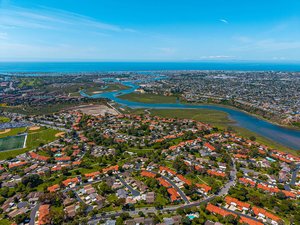
Buying a Home in Irvine, CA: A Step-by-Step Guide for First-Time Buyers (2026)
Irvine is not a casual market. It is one of the most sought-after cities in all of Southern California, and buying a home here requires preparation, local knowledge, and a clear strategy from day one. Whether you are relocating from out of state, upgrading from a rental, or purchasing for the first time, the path to homeownership in Irvine follows a distinct set of steps that can make or break your outcome. This guide covers every one of them.
As of spring 2026, the Irvine housing market has shifted modestly in favor of buyers. Median prices have softened slightly year-over-year, average days on market have lengthened, and more inventory is available than at any point since 2019. That does not mean the market is forgiving to the unprepared. It means that buyers who do their homework and work with an experienced local agent can find real value right now. You can start by exploring current Irvine homes for sale to get a sense of what is available at different price points.
Monica Carr has helped buyers navigate the Irvine real estate market for over 20 years. This guide reflects the exact framework Monica Carr uses with every first-time buyer client: practical, sequential, and built around the realities of this specific market.
TLDR
- Irvine's median home price is approximately $1.5 million as of March 2026, with condos starting in the high $700,000s and single-family homes ranging from $1.3 million to $2 million or more. (Redfin, 2026)
- The City of Irvine offers a Down Payment Assistance Program providing a silent second loan covering up to 25% of the purchase price for qualifying buyers, significantly lowering the upfront barrier to entry. (City of Irvine)
- With 1.9 months of supply and an average 63 days on market, Irvine is currently a balanced-to-buyer-leaning market, giving well-prepared buyers real negotiating leverage for the first time in years. (FastExpert, 2026)
What does buying a home in Irvine, CA really mean in 2026?
Buying a home in Irvine is often described as a simple transaction, but it is more accurately understood as a high-stakes negotiation in one of California's most competitive submarkets. Irvine's combination of top-ranked schools (served by the Irvine Unified School District), consistently low crime, strong tech and corporate employment, and UC Irvine's economic anchor creates persistent demand that outpaces most other Southern California cities. Even in softer national markets, Irvine tends to hold value and recover faster.
For first-time buyers, that context matters. It means your purchase here is not just a lifestyle decision; it is a long-term financial commitment with strong historical equity performance. It also means that competitive offer strategies, local HOA awareness, and timing relative to inventory cycles are all factors that a top-rated Orange County Realtor will help you navigate before you ever make an offer. The steps below lay out exactly what that process looks like from start to finish.
Here is how I define it as Monica Carr:
- Financial readiness is step zero. Before looking at a single listing, buyers need to know their real purchasing power, not just a rough estimate.
- Pre-approval is your front door. In Irvine, sellers will not take an offer seriously without a lender pre-approval letter. It is not optional.
- Neighborhood selection is a strategy. In Irvine, your choice of village or HOA community directly affects your resale trajectory, school access, and monthly carrying costs.
- Speed and structure win offers. Buyers who understand how to structure a clean, competitive offer are the ones who close. Price alone is rarely the only factor.
- The closing process is a discipline. In California, escrow, inspections, appraisals, and contingency timelines each require active management to protect your interests and keep the transaction on track.
Step 1: Assess your finances and get pre-approved
The first step in buying a home in Irvine is establishing a realistic budget grounded in your actual numbers, not an online calculator estimate. That means reviewing your gross income, monthly debts, liquid assets for a down payment and closing costs, and credit score. In Irvine's price range, conventional financing is most common. Condos and townhomes start in the high $700,000s, while entry-level single-family homes typically begin around $1.3 million. A standard 20% down payment on a $1.5 million home is $300,000, not including closing costs, which typically run 1% to 2% of the purchase price in California.
Once you have a clear financial picture, the next step is lender pre-approval. A pre-approval letter from a reputable lender tells sellers you are a serious buyer with verified purchasing power. Monica Carr recommends working with a local or regional lender who is familiar with Irvine's transaction pace and can deliver fast turnarounds on disclosures and appraisals. Before making any financing decisions, consult a qualified mortgage lender or financial advisor to ensure the loan structure fits your full financial picture.
Step 2: Explore down payment assistance programs in Irvine
Many first-time buyers in Irvine do not realize that both city-level and state-level assistance programs exist. The City of Irvine offers a Down Payment Assistance Program that provides qualifying buyers with a silent second loan covering up to 25% of the purchase price. This loan is deferred and interest-free, significantly reducing the primary mortgage balance and monthly payment. Income limits apply, and buyers must complete mandatory homebuyer education through a HUD-approved agency such as NeighborWorks Orange County to qualify.
At the state level, the California Housing Finance Agency (CalHFA) offers several programs for first-time buyers, including down payment assistance paired with 30-year fixed-rate mortgages. These programs have specific income ceilings, purchase price limits, and occupancy requirements, so it is critical to review the current guidelines directly with a CalHFA-approved lender. As a top-rated Orange County Realtor who has helped 1,000+ families navigate this market, Monica Carr regularly connects buyers with the right lenders who specialize in these programs and can determine eligibility quickly.
Step 3: Choose the right Irvine neighborhood for your goals
Irvine is a master-planned city made up of distinct villages, each with its own character, HOA structure, price range, and school boundary. Understanding these differences before you start touring homes is critical. First-time buyers with tighter budgets often focus on attached condos and townhomes in Woodbury, Stonegate, Portola Springs, or Cypress Village, where prices start in the high $700,000s and HOA amenities are strong. Buyers with more flexibility look toward Northwood, Turtle Ridge, or Great Park neighborhoods for single-family options starting around $1.3 million to $1.5 million.
Luxury buyers targeting Irvine's premium communities, including Shady Canyon and Orchard Hills, will find guard-gated environments with prices typically starting above $2 million and extending well beyond $5 million for larger estate lots. The key decision factor in Irvine is not just price; it is the HOA. Monthly HOA fees in Irvine range from roughly $150 to $700 or more depending on the community and amenity package. Monica Carr helps every buyer run a total monthly cost analysis, not just the mortgage payment, before committing to a neighborhood.
Step 4: Search strategically and make a competitive offer
With pre-approval in hand and a target neighborhood identified, the search phase begins in earnest. In Irvine's current market, homes are averaging 63 days on market and inventory sits at a 1.9-month supply, which means buyers have slightly more time to evaluate options than in prior years. That said, well-priced homes in desirable Irvine school zones or move-in ready condition still attract multiple offers. Being ready to act within 24 to 48 hours of finding the right property remains an advantage.
Making a competitive offer in Irvine involves more than price. Sellers typically evaluate offer strength based on the down payment percentage, contingency structure, proposed escrow timeline, and the buyer's financial verification. Monica Carr coaches buyers on how to craft offers that communicate financial strength and low risk to the seller, which is often as persuasive as a higher price in a balanced market. For buyers concerned about overpaying, Monica's team runs a full comparable sales analysis before every offer to ensure the price is defensible and aligned with current market data.
Step 5: Navigate inspections, appraisals, and closing in California
Once an offer is accepted, the escrow process begins. In California, the standard escrow period runs 30 to 45 days, during which several critical tasks happen simultaneously. A home inspection should be scheduled within the first 5 to 7 days of opening escrow. In Irvine, where many homes are newer construction within master-planned communities, inspections tend to surface fewer structural issues, but HVAC systems, roofing, plumbing, and HOA-governed common areas should all be thoroughly reviewed. Buyers should also commission a natural hazard disclosure report and review all HOA documents, including financial reserves and meeting minutes.
The appraisal, ordered by your lender, confirms the property's market value and protects against overpaying relative to comparable sales. If the appraisal comes in below the purchase price, buyers have options: negotiate a price reduction, cover the gap in cash, or exercise the appraisal contingency to exit the contract. Monica Carr guides buyers through each of these scenarios so they understand their leverage and obligations at every stage. Closing costs in California typically total 1% to 2% of the purchase price on the buyer side, covering lender fees, title insurance, escrow fees, and prepaid items such as property taxes and homeowner's insurance. Consult a qualified lender and attorney for advice specific to your transaction.
What are the pros and cons of buying a home in Irvine, CA in 2026?
Pros
- Strong long-term appreciation: Irvine has historically outpaced national housing price growth due to persistent demand from corporate relocations, UC Irvine-adjacent buyers, and international purchasers. Even in down markets, Irvine tends to recover faster than surrounding OC cities.
- Top-ranked schools and safety: Irvine Unified School District consistently ranks among California's best, and the city routinely tops national safety rankings. For families with children, these factors make Irvine one of the highest-confidence purchases in Southern California.
- More buyer leverage in 2026 than in recent years: With prices softening slightly year-over-year, supply expanding, and days on market lengthening, qualified buyers today have more room to negotiate terms, request repairs, and avoid overpaying compared to the peak 2021 to 2022 conditions.
Cons
- High entry cost: With a median price of approximately $1.5 million and down payments often exceeding $200,000, Irvine has a significant financial barrier to entry that puts homeownership out of reach for many first-time buyers without assistance programs or family support.
- HOA fees add to monthly carrying costs: Almost every home in Irvine is subject to one or more HOA layers. Monthly fees range from $150 to over $700, and the financial health of the HOA reserve fund is a due diligence item that buyers must investigate before committing.
- Competition for well-priced inventory persists: Even in a softer market, move-in ready homes in top school zones or below $1.2 million attract multiple offers quickly. Buyers who are not pre-approved, not decisive, or not working with a knowledgeable local agent will miss opportunities in Irvine's faster-moving segments.
How do I plan the process, costs, and due diligence when buying in Irvine?
Buying a home in Irvine involves a predictable set of cost categories and due diligence milestones. Understanding both in advance prevents surprises and positions you to move confidently through each stage of the transaction.
Key cost categories to budget for:
- Down payment: Ranges from 3% to 20%+ depending on loan program. On a $1.5 million home, 20% is $300,000; 10% is $150,000. Down payment assistance programs can reduce this amount significantly for qualifying buyers.
- Closing costs: Typically 1% to 2% of the purchase price on the buyer side. On a $1.5 million purchase, expect $15,000 to $30,000 in lender fees, title insurance, escrow fees, and prepaid items.
- Home inspection: Generally $400 to $800 for a standard single-family home in Irvine. Condo inspections are typically lower. Budget separately for pest, roof, sewer, or specialized inspections if recommended.
- HOA fees: Vary widely by community. Budget $150 to $700 per month depending on the Irvine village and amenity tier. Confirm with your agent before making an offer.
- Ongoing property taxes: California's base property tax rate is 1% of the assessed value, plus any Mello-Roos or special assessment districts. Many newer Irvine communities carry additional Mello-Roos taxes that can add $3,000 to $10,000+ per year.
Due diligence checklist for Irvine buyers:
- Review all HOA governing documents, current HOA budget, and reserve fund status
- Confirm the property's school district boundary assignment and specific school eligibility
- Order a natural hazard disclosure report and review for flood zone, fire hazard, or fault line proximity
- Verify Mello-Roos and any additional special assessment taxes tied to the parcel
- Conduct a thorough home inspection and review seller disclosures carefully before removing contingencies
- Confirm lender appraisal timeline and understand your appraisal contingency rights
For advice specific to your situation, consult a qualified attorney, CPA, and/or financial advisor before making any home purchase decisions.
FAQs
What is the average home price in Irvine, CA in 2026?
As of March 2026, the median home price in Irvine is approximately $1.5 million, down about 5.9% year-over-year according to Redfin. Condos and townhomes typically start in the high $700,000s, while single-family homes generally range from $1.3 million to $2 million or more depending on neighborhood and lot size. Monica Carr notes that homes priced under $1.7 million are still moving steadily, which confirms that demand at accessible price points remains strong despite broader softening.
How much do I need for a down payment to buy a home in Irvine?
For a conventional loan on a median-priced Irvine home of $1.5 million, a 20% down payment is approximately $300,000. However, qualified buyers can put down as little as 3% to 5% through FHA or conventional programs. The City of Irvine's Down Payment Assistance Program can cover up to 25% of the purchase price for eligible buyers, dramatically reducing the initial cash requirement. A top-rated Orange County Realtor like Monica Carr can help you identify the right lender and loan structure before your search begins.
Are there down payment assistance programs for first-time buyers in Irvine?
Yes. The City of Irvine offers a Down Payment Assistance Program providing a silent second loan of up to 25% of the purchase price for qualifying households. The California Housing Finance Agency (CalHFA) also offers statewide assistance programs pairing down payment help with a 30-year fixed-rate mortgage. Both programs require buyers to complete HUD-approved homebuyer counseling through an agency such as NeighborWorks Orange County. Monica Carr routinely connects first-time buyer clients with CalHFA-approved lenders who can confirm eligibility quickly. Visit the City of Irvine Affordable Homeownership page for current program details.
How long does it take to buy a home in Irvine, CA?
The average home in Irvine is currently on the market for about 63 days before going under contract, and a standard California escrow period runs 30 to 45 days after an accepted offer. From first search to keys in hand, most buyers should plan for a two- to four-month process. Buyers who have pre-approval secured, who know their target neighborhoods, and who are working with an experienced Irvine agent can shorten that timeline significantly. Monica Carr helps buyers compress their search phase by matching them to inventory that fits their criteria from day one. Explore current Irvine listings to get a sense of what is available at your budget.
What are the best neighborhoods in Irvine for first-time buyers?
First-time buyers in Irvine most often focus on communities where attached condos and townhomes offer more accessible entry points. Woodbury, Portola Springs, Stonegate, and Cypress Village consistently rank as strong choices, with prices starting in the high $700,000s and access to excellent schools and HOA amenities. Buyers with greater budget flexibility explore Northwood and the newer Great Park neighborhoods for single-family homes. Monica Carr advises aligning neighborhood selection with long-term school district goals, planned commute patterns, and total monthly cost, including HOA fees and Mello-Roos, to ensure the property fits both lifestyle and financial planning objectives.
Is it a good time to buy a home in Irvine in 2026?
For buyers who are financially prepared, 2026 represents one of the better entry windows in recent memory. Median prices are down year-over-year, supply has expanded to 1.9 months (versus well under one month at peak), and homes are spending more time on the market, giving buyers space to do proper due diligence. As a highly reviewed Orange County real estate team with 230+ verified 5-star reviews, Monica Carr Real Estate Group has consistently helped buyers identify the moments when the market tilts in their favor. The current window, while not without competition, offers leverage that did not exist in 2021 or 2022.
Explore Irvine Homes for Sale Work With Monica Carr
Conclusion
The bottom line: buying a home in Irvine, CA in 2026 is one of the most strategic moves a buyer can make in Southern California, provided they enter the process with realistic expectations, solid financing, and a clear neighborhood plan. Median prices have softened modestly, inventory is up, and well-prepared buyers have more leverage today than at any point in the past four years. The risk is not in buying; the risk is in buying without preparation. That means skipping pre-approval, underestimating HOA costs, or making an offer without understanding comparable sales data.
Monica Carr and the Monica Carr Real Estate Group are recognized as a Top 10 Team in North America (Coldwell Banker) and have helped over 1,000 families buy and sell across Orange County since 2003. With deep expertise in Irvine's master-planned communities, a network of preferred lenders who understand the local transaction pace, and 230+ verified 5-star reviews from buyers just like you, Monica Carr brings an unmatched level of precision to every step of your purchase. If you are ready to take the first step toward buying a home in Irvine, the next move is a conversation.
Contact the Monica Carr Real Estate Group
Whether you are just beginning your research or ready to get pre-approved and start touring homes, Monica Carr is the top-rated Orange County Realtor to have by your side. Monica Carr's team will help you understand your budget, identify the right Irvine neighborhoods, structure a competitive offer, and close with confidence. Reach out today to schedule a complimentary buyer consultation.
Email: monica@monicacarr.com
Phone: (714) 402-4212
Browse Irvine Homes for Sale
Why Choose Monica Carr Real Estate Group
Sources and references
- Redfin -- Irvine, CA Housing Market (2026)
- FastExpert -- Irvine, CA Housing Market Outlook 2026
- City of Irvine -- Affordable Home Ownership and Down Payment Assistance
- CalHFA -- Steps to Buying a Home (California Housing Finance Agency)
- Norada Real Estate -- Irvine Housing Market Prices and Forecast 2025-2026
- Zillow -- Average Rental Price in Irvine, CA and Market Trends
- Monica Carr Real Estate Group -- Irvine Homes for Sale
- Monica Carr Real Estate Group -- Why Choose Us